Blog
Commercial Building Cleaning in Edinburgh: A Complete Guide for Homeowners
What does commercial building cleaning involve?
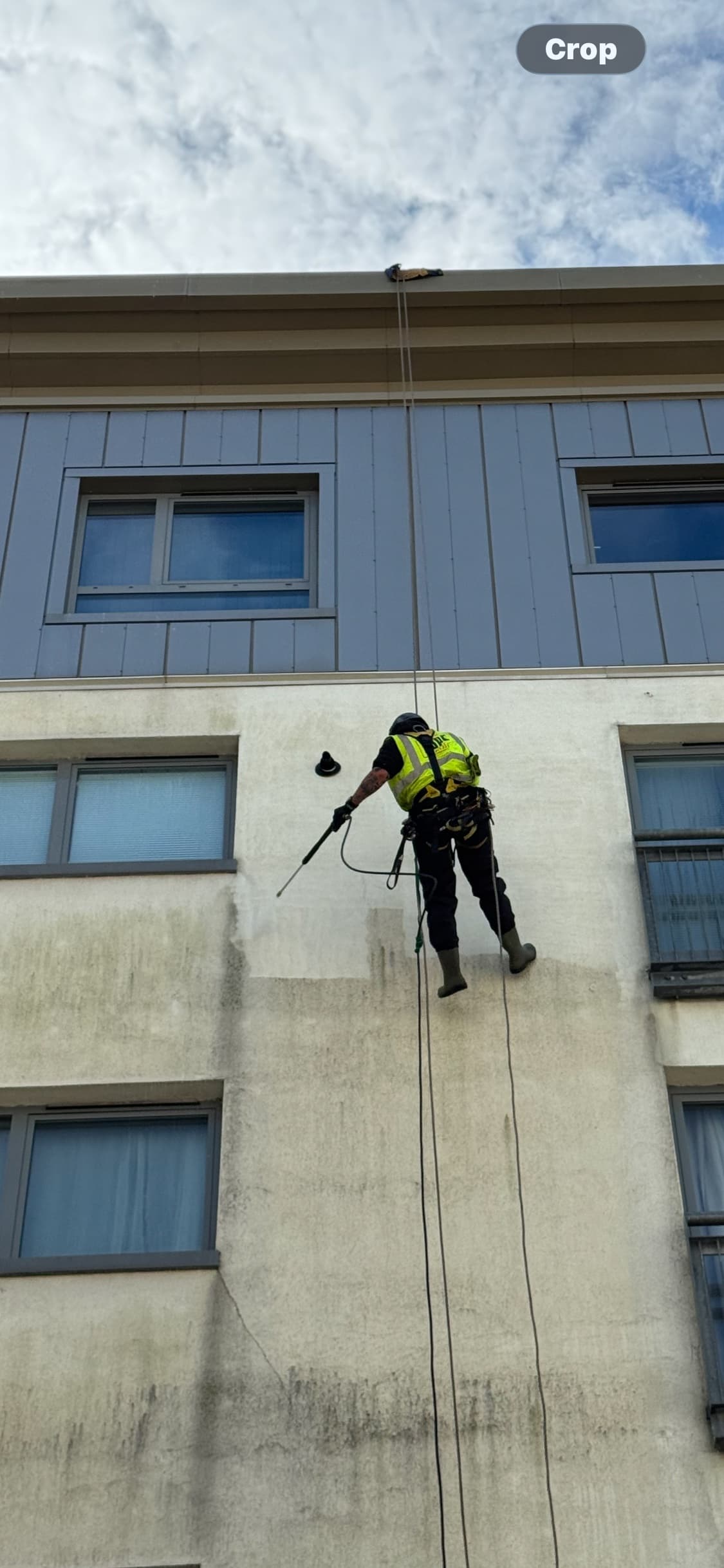
Commercial building cleaning covers the planned removal of dirt, staining, organic growth, debris and surface contamination from non-residential properties. In Edinburgh, this can include tenement blocks, offices, retail units, warehouses, schools, communal stairwells and mixed-use buildings across the city and Leith.
For homeowners, the same principles are useful when managing a shared property, rental building or premises connected to a residential block. Cleaning is not simply about appearance. It can help reveal defects, maintain access routes and provide a clearer view of the building’s condition.
The correct approach depends on the construction, height, surface materials, access limitations and type of contamination. A stone tenement in Leith needs different consideration from a modern commercial unit or an older slate-roofed property in central Edinburgh.
Why regular building cleaning matters in Edinburgh
Edinburgh’s buildings are exposed to wind, rain, traffic residue, airborne pollution and seasonal organic growth. Moisture can collect on ledges, parapets, gutters, window surrounds and roof edges. If debris is left in place, it may obscure defects or contribute to blocked drainage.
Regular cleaning can help property owners to:
- Keep external walls, windows and entrances presentable
- Identify damaged pointing, cracked render, slipped slates or defective roof details
- Reduce the build-up of leaves and debris around gutters and drainage points
- Maintain clearer records of the building’s external condition
- Prepare a property before painting, repair work or inspection
- Address visible contamination before it becomes more difficult to remove
Cleaning should not be treated as a substitute for repair. Staining, loose masonry, water marks and persistent damp patches may indicate an underlying building issue that needs separate investigation.
What should be included in a commercial cleaning assessment?
A useful assessment should begin with the building rather than a fixed cleaning method. The property owner or manager should consider the following areas.
External walls and elevations
Check for staining, algae, moss, bird fouling, accumulated dust and areas where water is tracking down the elevation. Particular attention is needed around window openings, cornices, sills, parapets and projecting stonework.
On older Edinburgh buildings, cleaning can expose fragile pointing or weathered stone. Aggressive treatment may cause damage, so the surface and its condition need to be considered before work starts.
Windows and frames
Commercial window cleaning may form part of a wider building cleaning programme. Windows should be assessed alongside frames, surrounds, access points and any areas where dirt is collecting above or below the glazing.
Clean windows can improve the presentation of a property, but they can also make defects easier to see. Cracked panes, failed seals, damaged frames and loose surrounding materials should be recorded rather than overlooked.
Roof edges, gutters and drainage
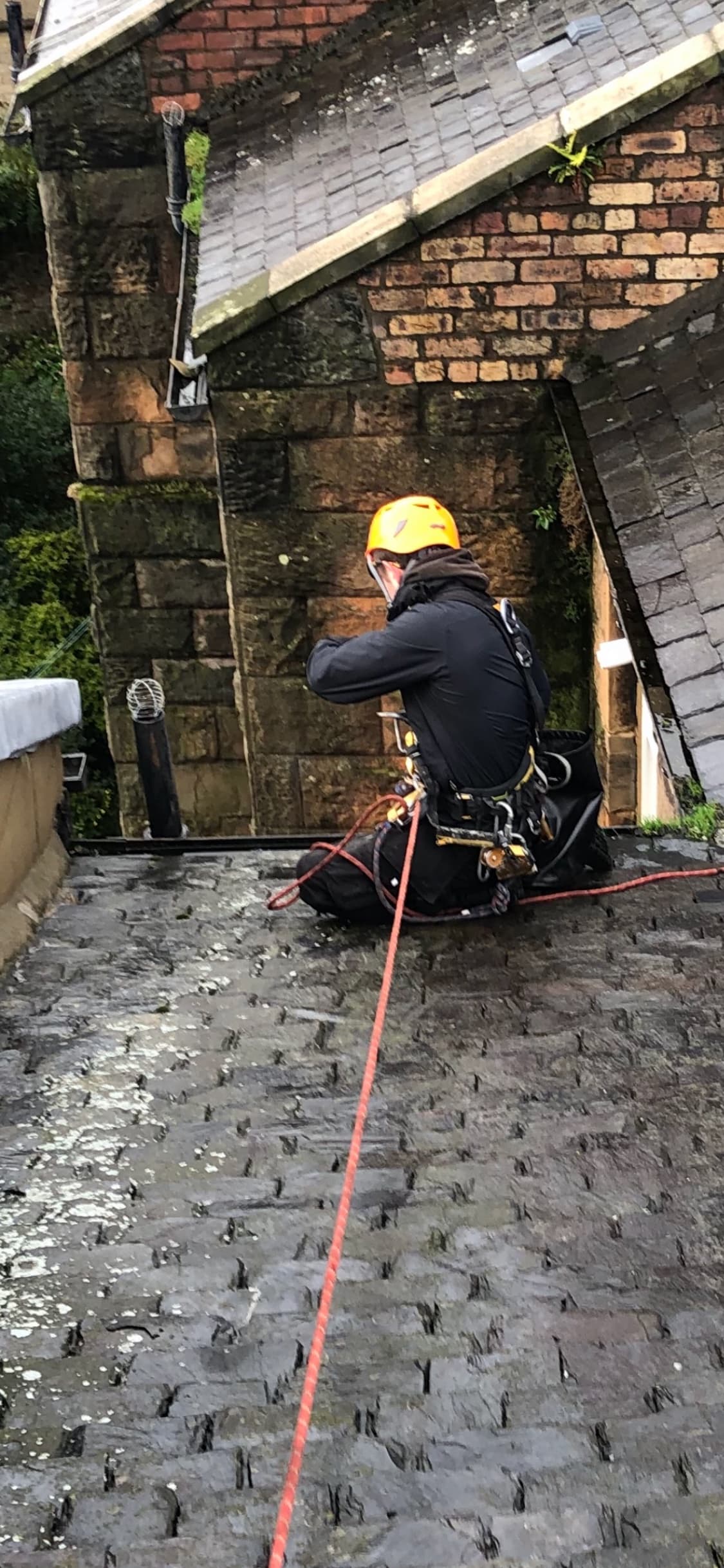
Gutters, downpipes and roof margins are important inspection points. Leaves, moss and general debris can restrict water flow, allowing water to overflow onto walls or enter areas around the roofline.
Gutter cleaning should be planned with the building’s height, access and roof construction in mind. If the inspection identifies slipped slates, damaged flashing or defective building details, those issues should be considered separately from cleaning. Commercial slating and building repairs may be required where a defect is confirmed.
Entrances and communal areas
Doorways, canopies, steps, balconies and communal access routes often receive heavy use. Dirt can build up in sheltered areas, while damp surfaces may become slippery or difficult to maintain.
A building cleaning plan should identify which areas are included, how frequently they need attention and whether residents, tenants or visitors require advance notice.
Access and safety considerations
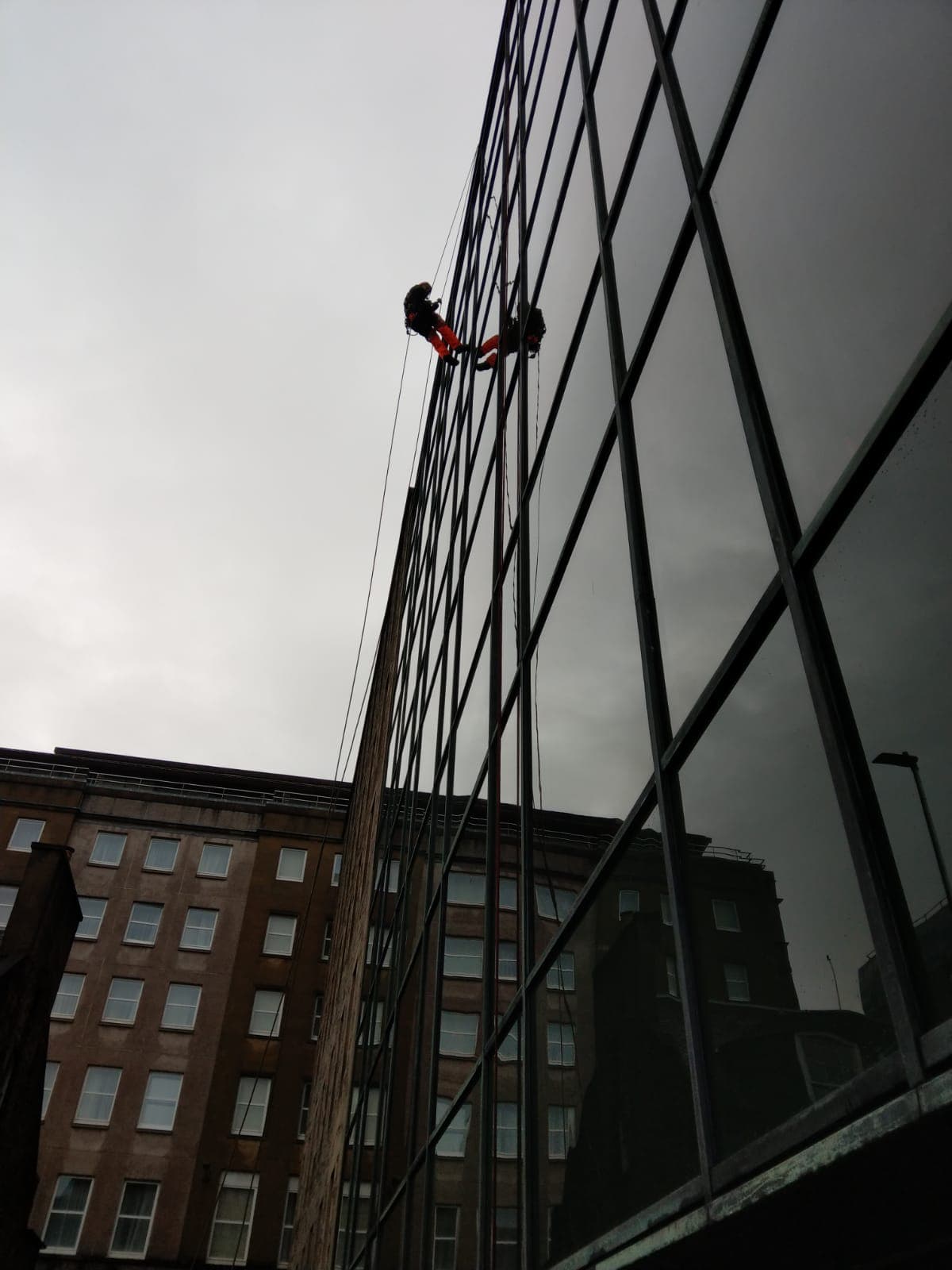
Work at height requires proper planning. Before cleaning begins, assess the building’s height, surrounding ground, neighbouring properties, public footpaths, overhead obstructions and the condition of the surfaces being accessed.
Different properties may require different access arrangements. A site with restricted rear access, a narrow close or an exposed roof edge needs a more detailed plan than a low-rise building with clear ground access. Stop-drop roofing and building support services may also be relevant where equipment or materials need additional control during work at height.
Property owners should ask for clear information about the proposed work area, access arrangements and any precautions needed around residents, vehicles and public areas. Photographic records are particularly useful when agreeing the scope before work and reviewing the condition afterwards.
Photographic evidence and inspection reports
Photographs can turn a general cleaning request into a properly documented maintenance record. Images should show the relevant elevation, roofline, guttering, windows or defect, with closer views where necessary.
For larger or more complex properties, a commercial roof inspection report can help separate cleaning requirements from repair recommendations. A domestic roof inspection report may be more appropriate for a residential property or shared building managed by homeowners.
A useful report should explain what was observed, where it was found and whether further attention is recommended. This gives owners clearer information when planning commercial slating, building repairs or future maintenance.
How to plan commercial building cleaning in Edinburgh
Start by listing the areas that need attention and noting any visible access problems. Take photographs of staining, blocked gutters, damaged roof coverings and hard-to-reach elevations. Check whether the building is occupied and identify any restrictions around trading hours, residents or public access.
The scope should then distinguish between cleaning, inspection and repair. This avoids treating a roof defect as a cleaning issue or assuming that removing surface contamination will resolve water ingress.
The property type, materials, access requirements, extent of contamination and any associated repair work will all affect the quotation. Request a site assessment so the work can be specified accurately rather than relying on a broad description of the building.
Commercial building cleaning across Edinburgh & The Lothians
For property owners in Edinburgh & The Lothians, Edinburgh Rope Access provides commercial building cleaning alongside commercial window cleaning, gutter cleaning, commercial slating and building repairs, and commercial roof inspection reports. The team can also assist with commercial building access services where the site requirements call for them.
To discuss a building cleaning requirement, inspection or related repair issue, contact Edinburgh Rope Access on 07919 101904 or email info@edinburghropeaccess.co.uk. A clear description of the property and its access constraints will help establish the right next step.
Other Articles